Choosing the right gum base determines the texture, flavor release, and shelf life of your final product. You must select the correct gum base to ensure consumer satisfaction. Wuxi Gum Base is a leading gum base manufacturer. We supply premium chewing gum base and bubble gum base to global markets. This definitive guide helps you choose the perfect gum base for your specific manufacturing needs.
The earliest gum base is made of natural rubber. With the development of the process, most gum bases are now composed of good-grade polymer and its complexes.
Gum base belongs to a food additive in domestic regulations, but it is not within the scope of GB29987. It is a unique food additive because its composition contains high polymer elastomer and resin materials. These substances replace natural rubber and give the base a unique taste.
Generally speaking,
the main ingredients for gum base are a polymer (elastomer), resin (plastic body), softener, filler, and emulsifier. The choice of different ingredients determines that each gum base has its unique characteristics. The gum base recipe is always the core technology for gum-based companies.
When chewing the gum, the elasticity, hardness, and texture of the gum base itself can be reflected. At the same time, as the carrier of flavor substances, we hope gum base can combine and release flavor and sweetness or acid. On the other hand, in the production of chewing gum, we will consider its plasticity, hardness, and the influence of temperature on it.
We usually use a soft and delicate taste gum base for ordinary bubble gum. Also, it should have some extension. Bubble gum base requires hardness while chewing gum base considers its comfort and the ability to release aromas after a long time of chewing.
Gum base has a softening point index; which helps customers in choosing gum base. Generally,
it is recommended to use a relatively high softening point of rubber-based products in hot areas, or the weather is hot. When it comes to finished chewing gum, it will be relatively durable. In brief, it is not easy to be softened. Those with a high softening point gum base it has strict requirements for raw material percentage. Then there will be two situations for chewing gum.
On one hand, the cost will be a little higher; on the other hand, chewing gum will be harder if the percentage is so exact. Therefore,
in a typical climate, it is suggested to use a regular softening point gum base from 55 to 62 ℃. During the production process, the choice of flavor is also critical.
As different flavor contains different solvent composition, it significantly influences producing finished chewing gum. It is suggested to select the type of flavor and its usage first, then communicate with the gum base factory to do some tests by professionals and advice or develop a suitable gum base. If every type of gum base is according to every different customer and product, it can reach the best effect. In addition, such gum base has high-cost performance; the opponent won't copy it easily.
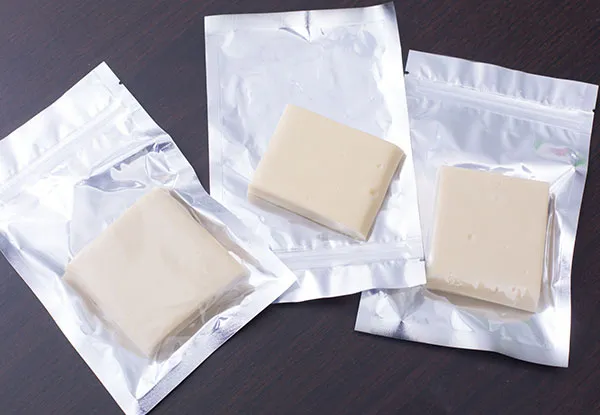
At the end of the gum base production process is molding. We will produce different shapes according to the needs of customers. There are blocks (6 to 8 cm), semi-block (usually 2-4cm thick), thin sheets (usually 0.5-1.5cm thick), granular (2-5cm in diameter), and powder (50 to 80 mesh). While to the limitation of transport conditions, the latter two are still in a small range of use stage. For customers, it must be selected according to the climate of its location. For example, in areas where the weather is too hot, if using a thin sheet of gum base, some factors in the process of packaging and transportation will lead the gum base to bond together, and the thickness is more than the block gum base itself. The production and packaging cost of semi-thin sheet gum base will be slightly higher, so the price will be higher; For block glue base, we must use oven preheating treatment, a variety of situations, and so on. So what shape of gum base products to use? It is recommended to use it before consulting some professionals.
Frequently Asked Questions
What is a gum base and how is it classified?
A gum base is an insoluble, non-nutritive masticatory substance. It provides the core texturizing delivery system for chewing gum and bubble gum products. According to the U.S. Food and Drug Administration (FDA) Code of Federal Regulations Title 21, "Gum base belongs to a distinct class of food additives that utilize food-grade synthetic polymers instead of traditional natural chicle rubber."
In domestic markets, the National Standard GB29987 outlines strict food additive safety criteria. However, a premium gum base requires specialized custom formulation due to its intricate high-polymer elastomer content.
What are the primary gum base ingredients?
A functional gum base contains five critical ingredients: elastomers, resins, softeners, fillers, and emulsifiers. The choice of these raw materials dictates the rheological properties of the final compound.
The Journal of Food Engineering reports that, "Synthetic elastomers comprise exactly 15% to 25% of the total mass of a modern gum base, dictating the elasticity and tensile bite resistance of the compound."
How do you choose between chewing gum base and bubble gum base?
You must evaluate your product's final physical performance requirements. Bubble gum base requires high film strength and superior elasticity. This specialized formula allows the gum matrix to trap air and expand without premature bursting. For example, Wuxi Gum Base utilizes high-molecular-weight polyisobutylene to achieve a 200% stretch coefficient in our bubble gum line. Conversely, chewing gum base prioritizes long-lasting cud volume, sustained mouthfeel comfort, and long-term aroma release.
Why does the gum base softening point matter?
The softening point determines the exact temperature threshold where the solid gum base transitions into a malleable fluid. Standard manufacturing lines utilize a regular softening point gum base ranging from 55°C to 62°C.
You must choose a high softening point formula (above 68°C) for hot geographic locations like the Middle East, North Africa, or Central America. A high softening point prevents the finished chewing gum from melting or warping during ocean freight transit.
How do flavor profiles impact your gum base selection?
Flavoring oils contain volatile chemical solvents. These active solvents act as strong plasticizers that can physically liquefy the gum matrix. For instance, high-concentration peppermint oils break down synthetic polymers 30% faster than fruit-based citric acid flavorings.
You must select your specific flavor type and usage percentages first. Then, your gum base manufacturer must perform solvent-compatibility tests. Wuxi Gum Base engineers use specialized laboratory tools to develop a custom gum base that prevents flavor-induced degradation.
If you have other questions about choosing a gum base, please contact us. Wuxi Gum base staff will give you satisfactory answers!
Author: Wuxi Gum Base
Publication Date: 5/9/2022